


Ahoy, readers. This month, we’re talking about building materials and resource use.
It’s starting to feel like it’s all bad news these days. Last month, the Trump administration repealed the EPA’s endangerment finding. In short, the finding stated that carbon dioxide and other gasses are an endangerment to human health, and this formed the legal basis for the EPA’s regulation of those pollutants. We are also beginning to see symptoms of ‘day zero droughts’, or periods of unprecedented water scarcity in hotspots across the world. At the same time, infrastructure for AI-driven data centers continues to grow, which may contribute to a seven fold increase in water consumption by the middle of the century. And with OpenAI’s recent deal with the Pentagon, we can expect this resource scarcity to increase as the United States continues to make war on the world.
But we are also seeing municipal governments acting swiftly to curb toxic material use, creative strategies to reuse concrete, innovative straw bale panels, and independent energy grid alternatives. It’s likely that we have all the answers we need to solve the climate crisis; amidst this stormy sea of climate demise it’s important to remember that there are lighthouses everywhere (for those with eyes to see).
FIELD NOTES
Concrete Corruption and Something New From the Rubble

It’s fair to say that the concrete industry has a checkered past and present: concrete’s use is so widespread that competition for control of its production has produced some unsavory tales. The world’s largest cement manufacturer, Lafarge, recently plead guilty to routing six million dollars to ISIS in exchange for permission to operate a plant in Syria. In the demolition of Syrian neighborhoods around Damascus, allies of the Assad government were uniquely positioned to benefit: those with concrete factories and metalworking facilities were promised the spoils of rubble.
But the ubiquity of concrete means that some people are getting creative. Usually, when debris is reused, it is ground back into aggregate to form new concrete mixes. Maxence Grangeot at the EPFL had a different idea: scanning chunks of rubble to tetris into wall systems which use far less mortar than building anew.
FIELD NOTES
Beyond the Bale into Bio-Based Panels

Back in Issue 75 (Beyond the Bale), we looked into the companies producing prefabricated straw bale panels. These SIPs, or structural insulated panels, are easily patched into established construction methods, yet avoid much of the embodied carbon associated with conventional insulation. Check out this list of producers from far-flung corners of the world. And now a new prototype of compressed straw panel is available from Agriboard, based in Marked Tree, Arkansas. Their structural panel measures a familiar size of 4’ x 8’ x 3 ½” and is available for purchase at $128 per panel. They recommend testing it in mock-up or pilot home applications before scaling up.
ECO-TECHNICS
Paris is Bio-Based

In November 2024, Paris passed the PLU (Plan Local d’Urbanisme) which aimed to lower carbon emissions and create livable mixed use neighborhoods. They have since refined the plan to include bioclimatic elements. Check out this map of projects across the city which employ alternative materials and renewable fuel sources.
FIELD NOTES
Project Feature: Quinta de Adorigo Winery

This Portuguese winery was designed by Atelier Sergio Rebelo and is nestled into a hillside in the Douro Valley. It makes beautiful use of sweeping glu-lams and an organic curvilinear gabled roof. Designed by Atelier Sérgio Rebelo and built by Portilame, it houses the wine operation, tasting rooms, and a hotel.
BIOSPHERICS
New Renewables or Less Demand?

The Last Farm thinks we don’t need more renewable energy; we need to use less energy in the first place. Building out renewable energy infrastructure doesn’t decrease carbon emissions, it hypothetically lowers those emissions as compared to meeting the same demand with fossil fuels. This false binary is “like telling a healthy person they must [choose] between losing an arm or a leg.”
Sulphur hexafluoride, or SF6, is an odorless gas used to prevent electrical fires in high voltage systems, like those used in wind turbines and electrical substations. The big yikes? SF6 is 23,500 times as potent as carbon dioxide in terms of warming potential. As the world continues to electrify, leaks of the gas are increasing substantially, creating an unintended consequence in the effort to curb fossil fuel emissions with wind and solar.
BIOSPHERICS
Spain kicks off 3.2-GWh pumped-storage hydro project in Tenerife
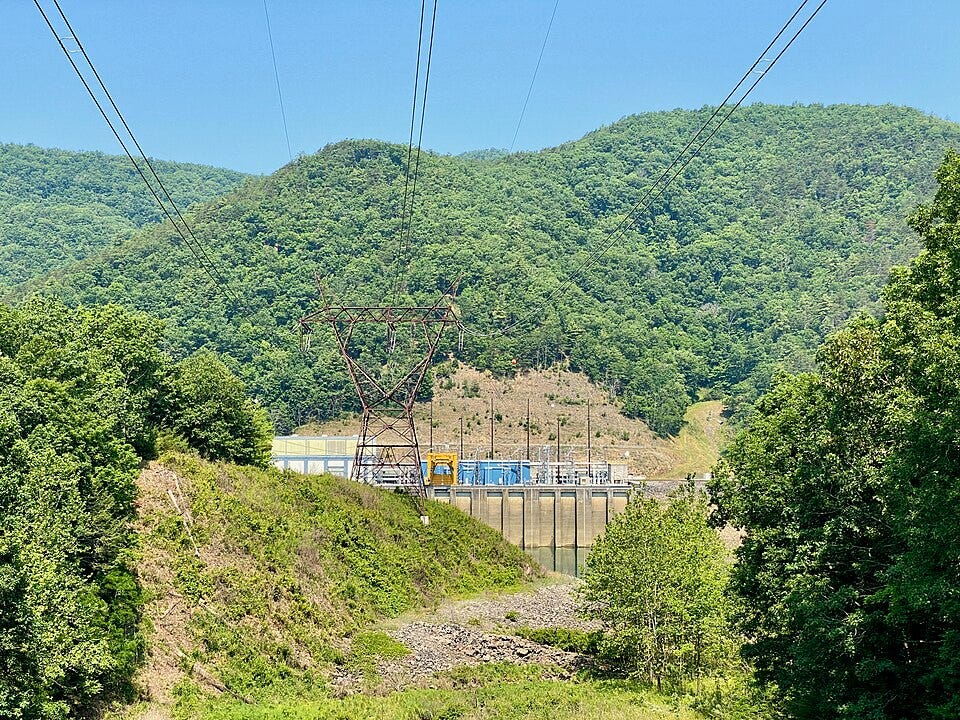
Hopefully we can scale back our resource use, using fewer raw materials and pollutants. In the meantime we need electricity, and Spain has recently invested more in a pumped storage hydroelectric system on Tenerife, in the Canary Islands. When power is cheap, either at night or when paired with overproducing solar panels, water is pumped uphill to a reservoir. This then feeds a hydropower generation system to provide a steady stream of electricity for the island. Renewables now make up more than a fifth of the power grid in the Islands.
Back in the U.S., pumped storage is the largest form of energy storage in the electrical grid (with the largest systems outside of China and Japan). While this old D.O.E. video mentions how this capacity could easily double, the future looks dim: the Trump administration has shared a cartoon piece of coal named “Coalie” saying “mine, baby, mine” and natural gas is apparently still the dominant heating fuel, as shown by this map from the Housing Assistance Council.

GREENWASH OF THE MONTH
Is The New American Home for 2026 “a model of efficiency and sustainability?”

Each year, The New American Home competition seeks to “maximize housing performance and energy efficiency.” But as Lloyd Alter points out, this year’s selection is all smoke and mirrors. At over 9,000 square feet, and featuring a 17-car garage and home theater, the home makes good use of the energy-use-per-square-foot metric. The concrete laden design is full of steel, spray foam, and refrigerant. Nice try.
Stay skeptical this month… If you ever find yourself near London (U.K.), Oakland (CA), or Green River (UT) let us know and let’s meet up!
See ya soon,
The Last Straw Editorial Collective
EVENTS
March 14 Cob Garden Wall Finish Plaster Workshop (free) - Sunset District in San Francisco, California
We’ve built this lovely garden wall out of heavy clay straw over repurposed old fencing, with a thick base-coat of clay horse manure. We’ve added a living roof for some added protection to the wall, complete with urban arbor-salvaged live-edge redwood. Now, we’ll be perfecting our details with the finish coat. For this portion of the project, we’ll be using hawks and trowels, so prior experience plastering, including plaster workshops, is recommended. For those completely new to the plastering process, you can come check it out anyway—chances are high you can come get muddy and learn a thing or two. Please register with the owner-builder, Shari: shasamsf@yahoo.com
April 10-12 West Coast Natural Building Conference 2026 & Celebration of CASBA’s 30th anniversary! - San Luis Obispo, California
Join us for three days of presentations, discussions, hands-on instruction, community, and celebration; all focused on practicing and scaling natural and bio-based building methods. This year’s keynote speaker is Summer Islam of Material Cultures. Online registration closes on March 22, so get your tickets soon!
(ad)
Community Rebuilds is hiring a Construction Supervisor for April 2026. This role leads the on-site construction of six affordable, energy-efficient homes while managing safety, materials, schedules, and subcontractors. Applicants should be able to read blueprints, multitask, and demonstrate strong leadership and organizational skills. The supervisor trains volunteers and supports homeowners in meeting USDA Mutual Self-Help requirements. Moab-based nonprofit. Compensation DOE; housing available. Email your resume to info@communityrebuilds.org
THANK YOU TO OUR CURRENT SPONSORS


DON’T MISS OUT, GET OUR CURRENT ISSUE WHILE ITS HERE!
The Last Straw Issue 76, on Natural Building Education
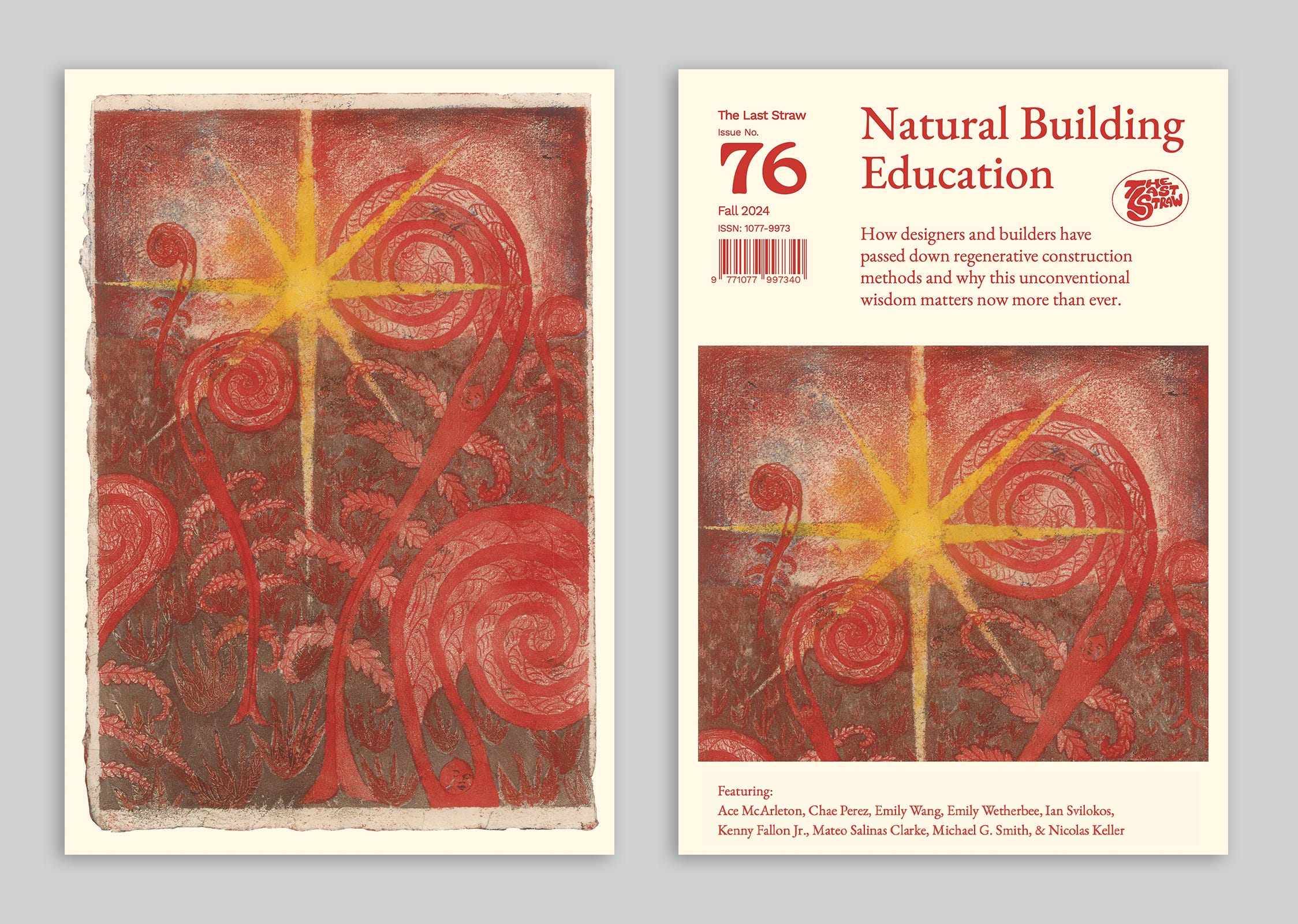
How do you learn natural building? How do you teach it? In this issue our contributors trace the histories and the present of natural building education to figure out a way ahead.